Total Cooking Time: 40 minutes (plus marinating time)
Difficulty Level: Easy
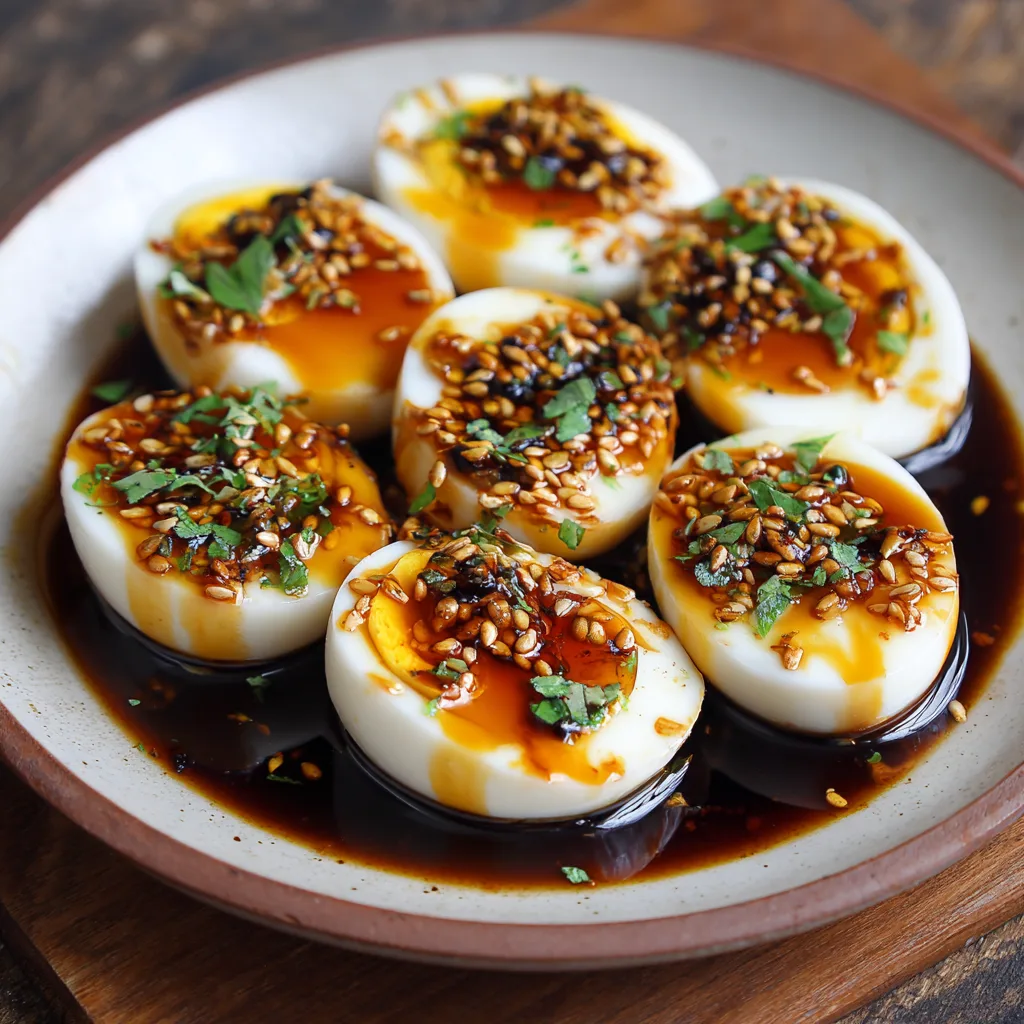
Savory soy sauce eggs are one of those quietly addictive foods that sneak into your routine and never quite leave. The first thing you notice is their sheen—deep brown, almost glossy—followed by that unmistakable aroma of soy, garlic, and gentle sweetness. Slice one open and the yolk reveals itself: creamy, golden, and rich, just firm enough to hold its shape while still melting on your tongue. They’re simple, humble eggs, yet they taste layered, thoughtful, and deeply satisfying.
What makes these eggs so special is their balance. They’re salty but not harsh, savory without heaviness, and subtly sweet in a way that feels grown-up rather than dessert-like. They work as a snack, a topping, or a quiet star in a larger meal. Serve them with rice, ramen, salads, or tucked into lunchboxes, and they somehow feel both comforting and elevated. Anyone who loves bold, umami-forward flavors will appreciate them—and yes, even Salad Fingers might nod in approval. Each egg clocks in at roughly 80–100 calories, making them a nourishing, protein-rich treat you can feel good about enjoying often.
Key Ingredients
These savory soy sauce eggs come together with everyday pantry staples, each one contributing to depth, balance, and aroma.
- Large Eggs – The foundation; provide creamy yolks and tender whites that absorb flavor beautifully.
- Soy Sauce – The backbone of the marinade, delivering saltiness and deep umami.
- Water – Softens the marinade so it seasons without overpowering.
- Brown Sugar – Adds subtle sweetness and helps create that glossy finish.
- Mirin – Brings gentle acidity and a rounded sweetness that balances soy.
- Garlic Cloves – Infuse savory warmth and complexity.
- Fresh Ginger – Adds brightness and a light, peppery zing.
- Sesame Oil – A few drops add nutty aroma and richness.
- Rice Vinegar – Lifts the flavors and keeps the eggs from tasting flat.
- Green Onions – Fresh contrast and color for finishing.
- Black Peppercorns – Mild heat and aromatic depth.
- Star Anise – Optional, but adds subtle spice and intrigue.
- Sesame Seeds – Texture and visual appeal.
- Chili Flakes – Optional heat for spice lovers.
- Salt – Just a pinch for boiling water to season the eggs lightly.
How to Make It (Step-by-Step Method)
1. Cook the eggs
Bring a medium saucepan of water to a full boil. Add a pinch of salt, then gently lower the eggs into the water. Boil for 6½ minutes for jammy yolks or 7½–8 minutes for fully set yolks. Immediately transfer the eggs to an ice bath and let them cool for 5 minutes to stop cooking.
2. Peel the eggs
Tap the shells gently on the counter and peel from the wider end, where the air pocket sits. Peel under running water for smooth, clean whites. Set aside.
3. Make the marinade
In a small saucepan, combine soy sauce, water, brown sugar, mirin, rice vinegar, garlic, ginger, sesame oil, peppercorns, and star anise. Bring to a gentle simmer over medium heat. Cook for 5–6 minutes, stirring until the sugar dissolves and the mixture smells fragrant and slightly sweet. Remove from heat and allow to cool to warm room temperature.
4. Marinate the eggs
Place the peeled eggs in a shallow container or resealable bag. Pour the cooled marinade over the eggs, ensuring they’re mostly submerged. Cover and refrigerate for 4–10 hours, turning the eggs once halfway through for even color and flavor.
5. Finish and slice
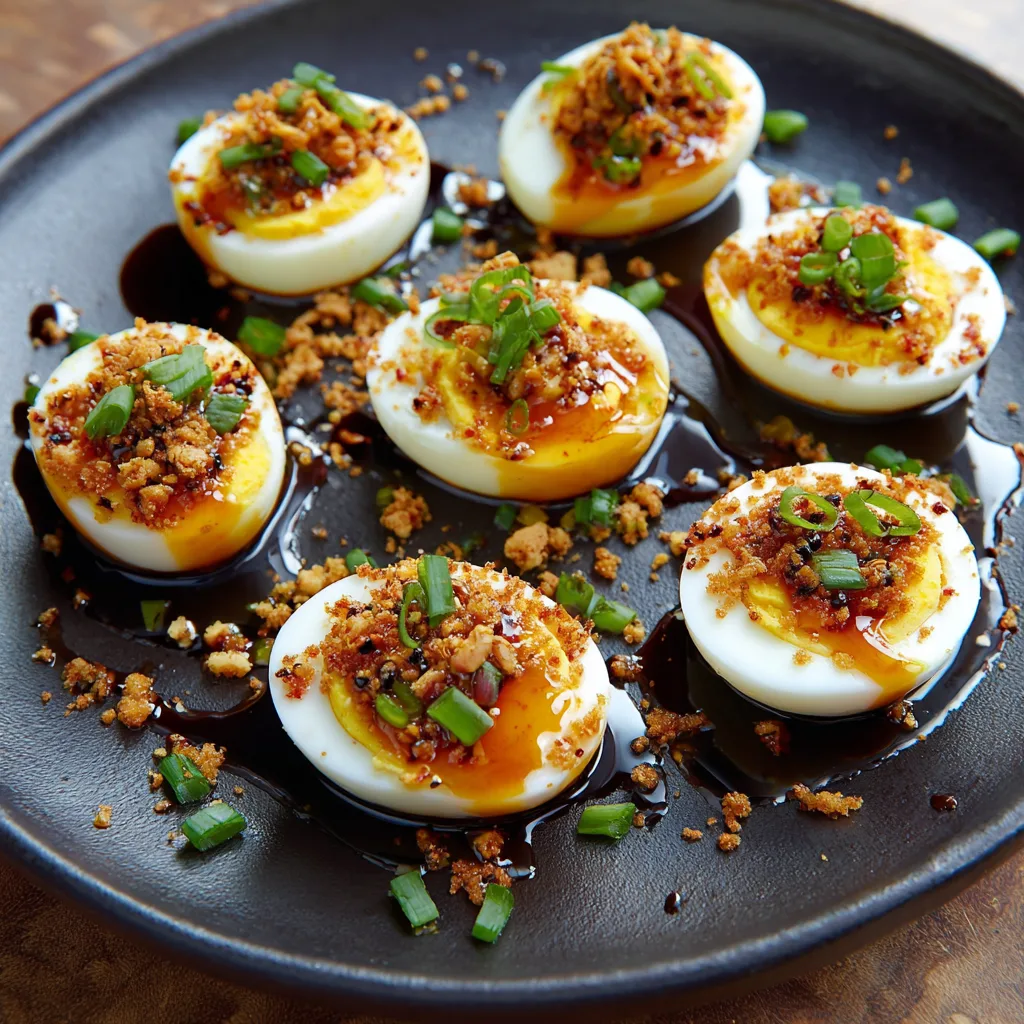
Remove eggs from the marinade and pat dry. Slice in half lengthwise. Look for deeply seasoned whites and rich, golden centers. Garnish with green onions, sesame seeds, and chili flakes if desired.
Serving Suggestions
Savory soy sauce eggs shine in both simple and elaborate presentations. For an effortless approach, serve them halved on a small plate with a sprinkle of sesame seeds and scallions. Pair with steamed rice and lightly sautéed greens for a minimalist, deeply satisfying meal. The yolk blends into the rice, creating a sauce that tastes far more complex than the effort involved.
For more visual flair, arrange the eggs atop noodle bowls—ramen, soba, or even chilled sesame noodles. Fan the halves slightly so the yolks are visible, adding contrast and richness to the dish. They’re also excellent in salads: slice and layer over crisp lettuce, cucumbers, and shredded carrots with a sesame vinaigrette. For gatherings, consider a build-your-own bowl setup with grains, vegetables, pickles, and sauces, letting guests customize their plates. No matter the format, these eggs bring depth, protein, and a polished finish to any spread.
Storage + Meal Prep
Savory soy sauce eggs are ideal for make-ahead meals. Store them peeled in an airtight container in the refrigerator for up to 4 days. Keep a small amount of marinade with them to prevent drying and maintain flavor. If you prefer milder eggs, remove them from the marinade after the first day and store separately.
Freezing is not recommended, as egg whites become rubbery when thawed. To enjoy leftovers, let eggs sit at room temperature for about 10 minutes before serving—this helps revive their texture and aroma. Avoid microwaving, which can overcook the yolks. On subsequent days, refresh the eggs with freshly chopped scallions, a drizzle of sesame oil, or a pinch of chili flakes. These small additions make meal-prepped eggs feel freshly made every time.
Conclusion
Savory soy sauce eggs are proof that the simplest ingredients can create something deeply comforting and crave-worthy. They’re rich without heaviness, flavorful without fuss, and endlessly adaptable to your tastes and meals. Whether you enjoy them as a snack, a topping, or a centerpiece, they bring warmth and satisfaction with every bite.
Try them once, and you’ll likely find yourself keeping a batch in the fridge at all times. Adjust the marinade, play with spices, or experiment with serving styles to make them your own. If you give this recipe a go, share your experience and favorite variations—these eggs are meant to be enjoyed, shared, and made again and again.